Taken together, they sketch a country standing at a crossroads — not lost, but recalibrating. The State Treasury’s anniversary series paints a surprisingly consistent picture of Finland in 2026: a nation searching for balance in the midst of rapid change. Working life is reshaping itself, networks are quietly holding society together, artificial intelligence is challenging long‑established ways of thinking, and economic history reminds us that debt is never just numbers on a page. Four perspectives, one narrative: a society in transition, steadying itself without losing its direction.
The spaces we work in reveal who we want to become – and expose a deeper shift in how we define ourselves
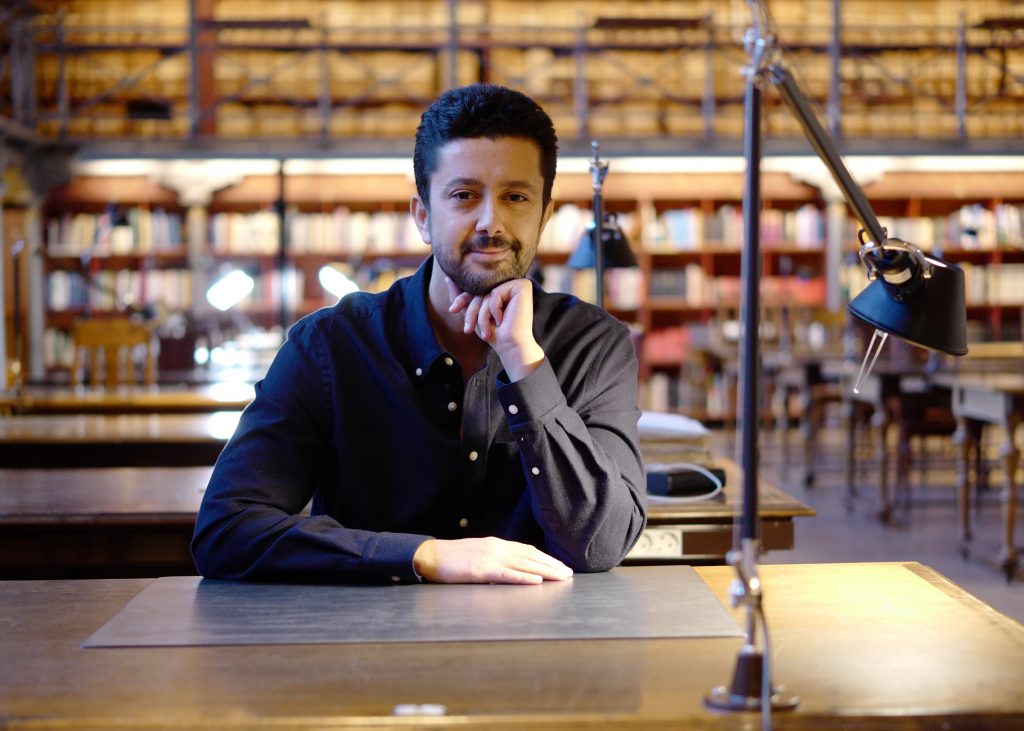
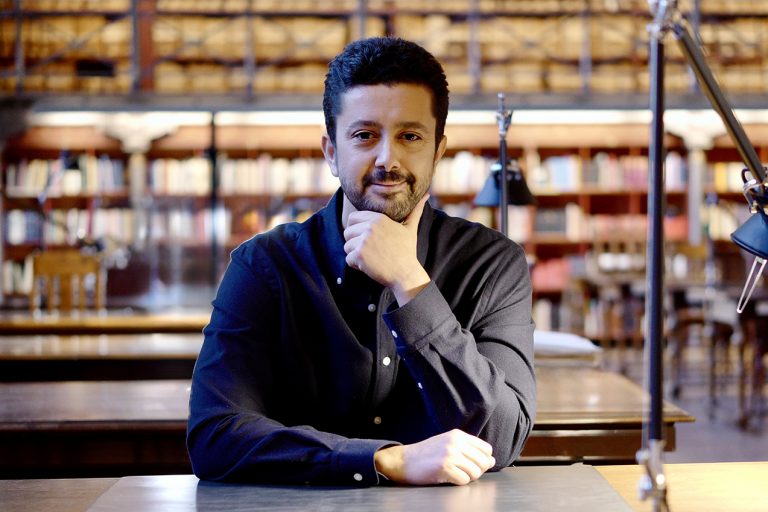
Anis Souissi (US Architects Oy) says he is fascinated by historical, high‑ceilinged spaces that invite people to pause and reflect. Photo: Henni Purtonen
They show that we are not only changing how we work, but also who we believe ourselves to be. Architect Anis Souissi and Personnel Development Manager Elsi Vuohelainen see the office as a stage where individual freedom and the human need to belong are constantly negotiating their place. Light, space and movement are not just design choices – they are questions of visibility, power and belonging.
In their view, the office of the future moves with the rhythm of work itself. Sometimes we need to look at space and work practices from a different angle to notice what every day routines make invisible. What happens when architecture’s promise of permanence meets the restless tempo of work? And what kinds of spaces and practices do we create if we want them to become part of our future heritage?
This article uses workspaces as a mirror reflecting something deeply human: how we want to live, work and belong in a world that refuses to stay still.
Read the article: The spaces we work in reveal who we want to become
Networks Are the Quiet Promise Holding Society Together
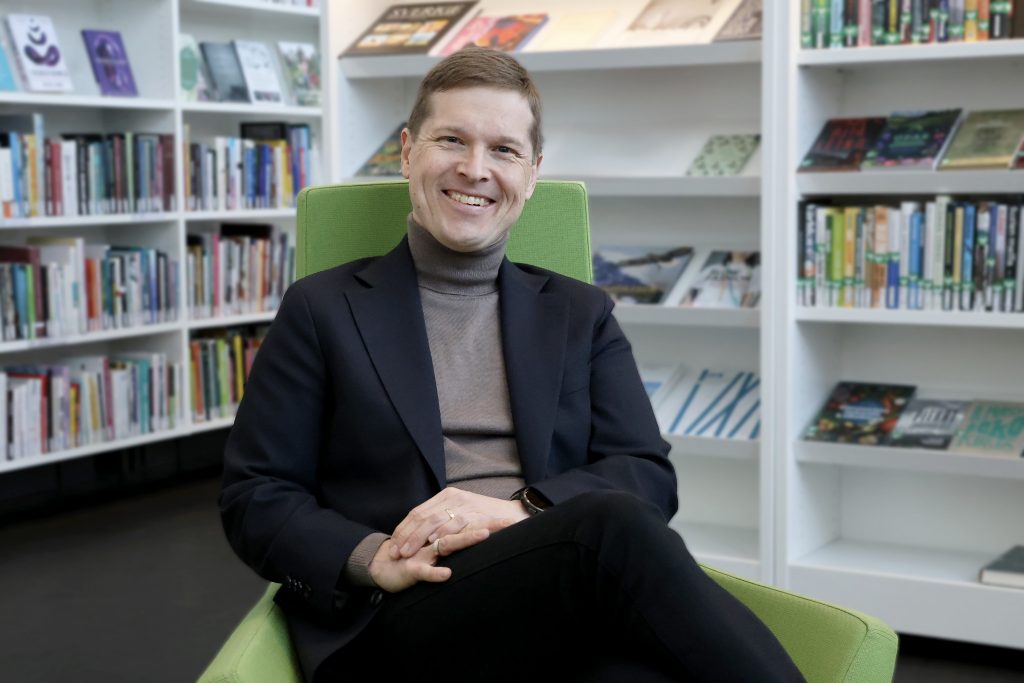
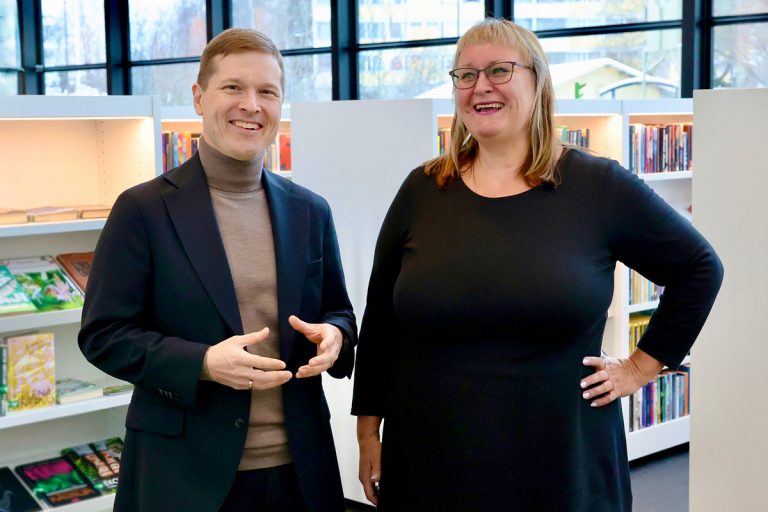
According to Timo Järvensivu, the world demands curiosity from us and the ability to listen to one another even when we disagree. Photo: Henni Purtonen
At this moment in Finland, networks reveal something essential about who we are and how we function. Debates about trust, administrative reforms and the carrying capacity of public services have exposed a truth that structures alone cannot solve: society runs on relationships. Networks gather the information, responsibilities and interpretations that no single organisation can contain. That is why they have moved to the centre of attention in a time when many are asking whether anyone can still see the bigger picture.
Researcher and educator Timo Järvensivu and researcher and Head of Development Sari Virta describe networks as an invisible infrastructure — one that supports organisations more reliably than any official chart. At the heart of these networks lies trust, and trust grows in the moment someone dares to say the most ordinary but disarming sentence: “I don’t know yet. Let’s look together.” It also exposes the risk inherent in networking. When people are not invited in, their voices go unheard. Decisions are then made within a circle far narrower than anyone would care to admit.
Networks offer an answer in an era when structures shift slowly but reality moves fast. They resemble a garden: something that can be tended but never owned. And in that garden, the contours of our shared future become visible. Ultimately, what we build together will depend on how well we cultivate these relational ecosystems — and how widely we choose to open the gate.
Read THE article: Networks are a silent promise that holds society together
Artificial intelligence changes the nature of risk – and it is no longer just a question of technology
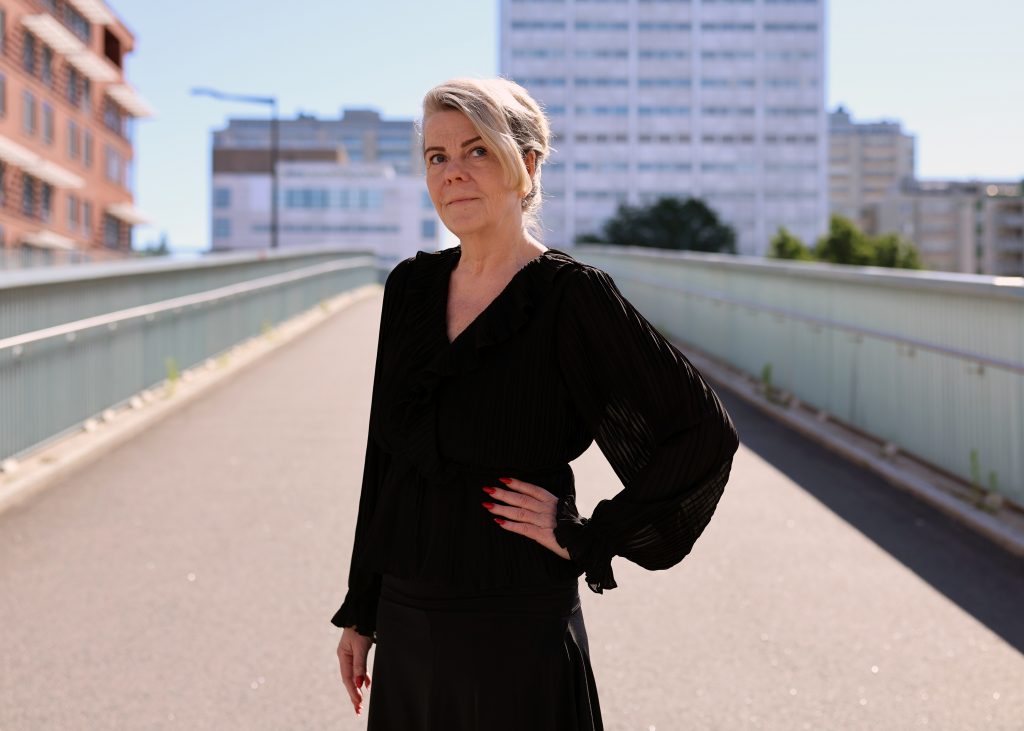
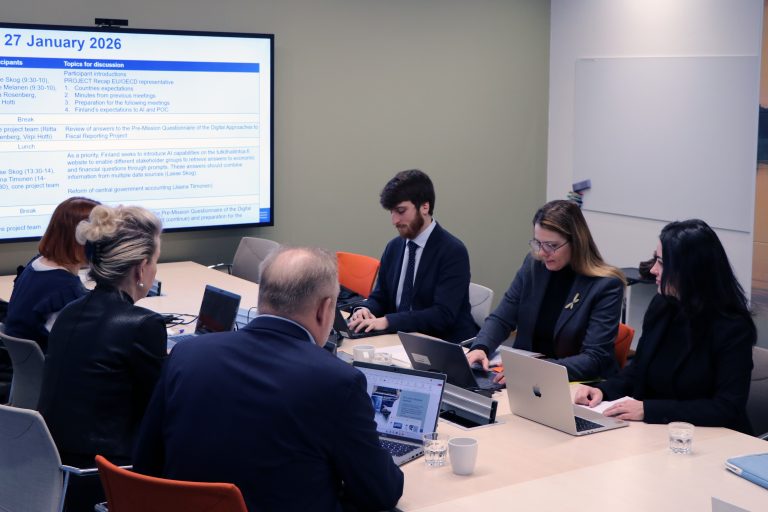
According to Virpi Hotti from the State Treasury, measurable benefits of AI have not yet been reported at the national level. Photo: Henni Purtonen
Artificial intelligence rarely announces itself. It slips into our routines quietly: first as a curiosity on the desktop, then as an invisible partner shaping how we think, decide and act. Researcher Anna Katariina Wisakanto and Chief Specialist Virpi Hotti describe a shift where AI no longer automates tasks – it begins to automate judgement.
At the same time, AI agents are emerging: systems that coordinate work, assign responsibilities and monitor progress. They step into roles once reserved for management, and with that, the foundations of risk management tilt. The question is no longer how to prevent errors, but how to build systems that survive them.
And because AI is also a question of power, another question follows: who defines its limits? In an age where people and systems no longer operate in the same rhythm, security does not come from certainty. It comes from the ability to function under uncertainty – and from accepting that part of decision‑making is moving into systems we can no longer fully control.
Read the article: AI redefines risk – but are we managing it right?
A country that pays its debts – economic history reminds us why trust is valid currency
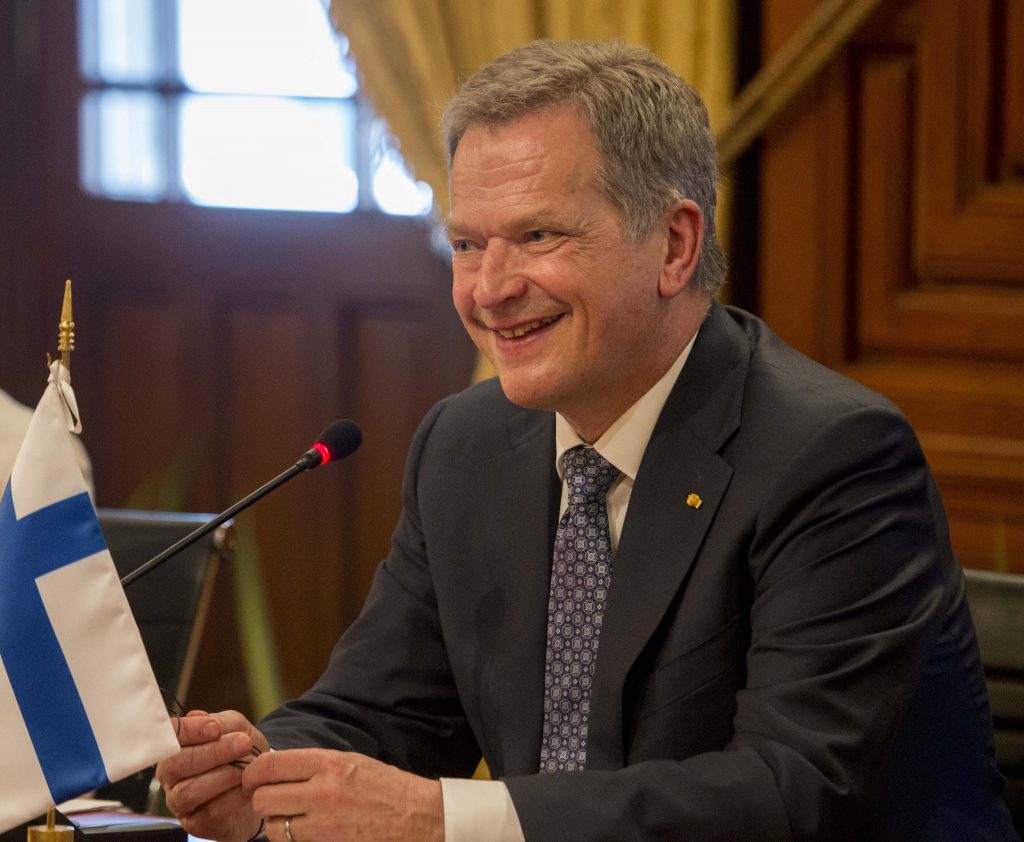
Photo: Presidencia de la República Mexicana / CC BY 2.0, edited from the original image
Finland’s history of government borrowing is a story of crises, recoveries and deliberate choices. From post‑war reconstruction to the recession of the 1990s, from the banking crisis to the early‑2000s moment when Finland held a AAA credit rating and the largest general government surplus in the euro area – one thread runs through it all: confidence has been earned, not assumed.
President Sauli Niinistö and Director of Finance Anu Sammallahti have both stood at the centre of this trajectory. As Minister of Finance from 1996 to 2003, Niinistö guided Finland out of recession, through the Nokia‑driven growth years and into the euro area. He was also the last Finnish finance minister to travel the world meeting investors face‑to‑face. Sammallahti, in turn, has navigated government borrowing through the volatile market conditions of the 2000s, where stability must be built decision by decision.
Today’s debate on public debt is often sombre, but history offers a counterweight: Finland has repeatedly changed course when circumstances demanded it. Long‑term fiscal discipline has kept borrowing affordable and preserved trust, and this is the quiet message of the article. Confidence is not an abstract virtue. It is a currency, and Finland has maintained its value by acting accordingly.
Read the article: A country that pays its debts
A transition that can only be perceived between phenomena
The identity shift reflected in workspaces shows how people are searching for their place in a moment when several transformations unfold simultaneously across different areas of life. When this is read alongside the article on networks, a broader pattern becomes visible: the same search is taking place at the societal level. Capacity does not arise from fixed structures but from relationships that adapt as fluidly as our everyday work adapts to the spaces available.
This perspective also reframes the article on artificial intelligence. There, the change is not merely technological; it concerns the reorganisation of decision‑making and tasks in a world where people and systems no longer operate in the same rhythm. And when viewed through the lens of economic history, one realisation stands out: confidence is the foundation of change – the element upon which everything else ultimately rests.
When phenomena start telling the same story
Together, these articles form a single narrative in which Finland is not defined by work, relationships, technology or the economy in isolation, but by the interplay between them. They show how identity, operational readiness, decision‑making and confidence are intertwined in an era that cannot be understood through any single phenomenon. This is precisely why these four articles should be read in parallel: only together do they offer a more detailed and truthful picture of Finland than any one of them could provide alone.
Overview article: Henni Purtonen