In Finland, we sometimes describe our country as a logistical island: we are bordered by sea to the south and west, wilderness to the north and a closed border to the east. This challenges supply chains that are already burdened by the current global situation. Yet challenges must be turned into drivers for action. We must – and we will – optimise cross-border trade to its fullest potential through smarter practices. As regulatory initiatives such as Vat in the Digital Age are in the horizon, Peppol takes even more of a central stage.
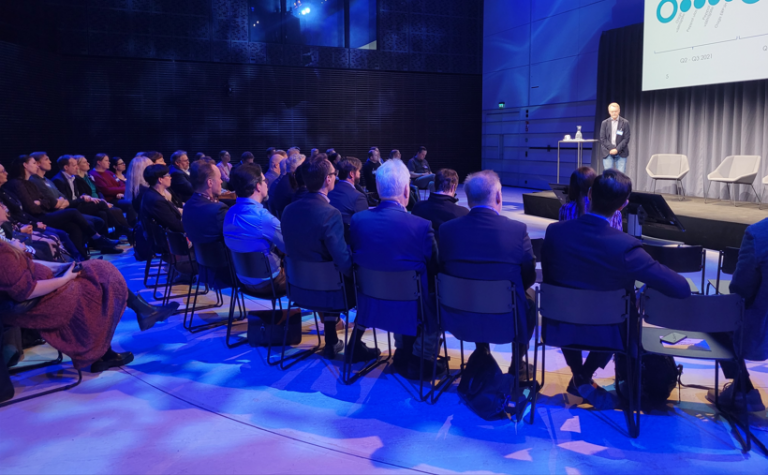
We had the pleasure of hosting Peppol Day Finland 2026 on 21 April at Finlandia Hall in Helsinki. The conference explored how Peppol can enable more efficient and seamless global trade.
Throughout the day, we heard insights from legislative, business, and technical perspectives. The event brought together Peppol Authorities from several countries, alongside industry experts and companies sharing real world experiences and practical use cases.
Untapped potential and different paths to achieve it
As noted in the articles “E‑Invoicing without borders: How Finland and Germany are accelerating the Peppol revolution?” and “E-invoicing landscape: Belgium – Finland”, we have untapped potential in global trade efficiency. This message was further reinforced through the discussions and presentations at Peppol Day Finland 2026. Together, we can increase the usage of Peppol in cross-border ordering, logistics and invoicing – and while the end goal is shared, the paths to achieving it can differ.
Legislation skyrockets the Peppol transaction statistics
During the audience discussion, a question was raised: “Has the Belgian e-invoicing mandate affected the Peppol statistics of Finland?” At the time, the answer was that the effect certainly could be seen. However, with the latest batch of statistics arriving just days after Peppol Day Finland, that response now requires an update.
Transactions between Belgium and Finland have skyrocketed. Belgium has rapidly risen to join Sweden and Norway as one of the most common countries with which Finnish companies exchange electronic business documents. The Belgium case clearly demonstrates how legislation can be powerful driver to more efficient cross-border trade, though it is not the only path.
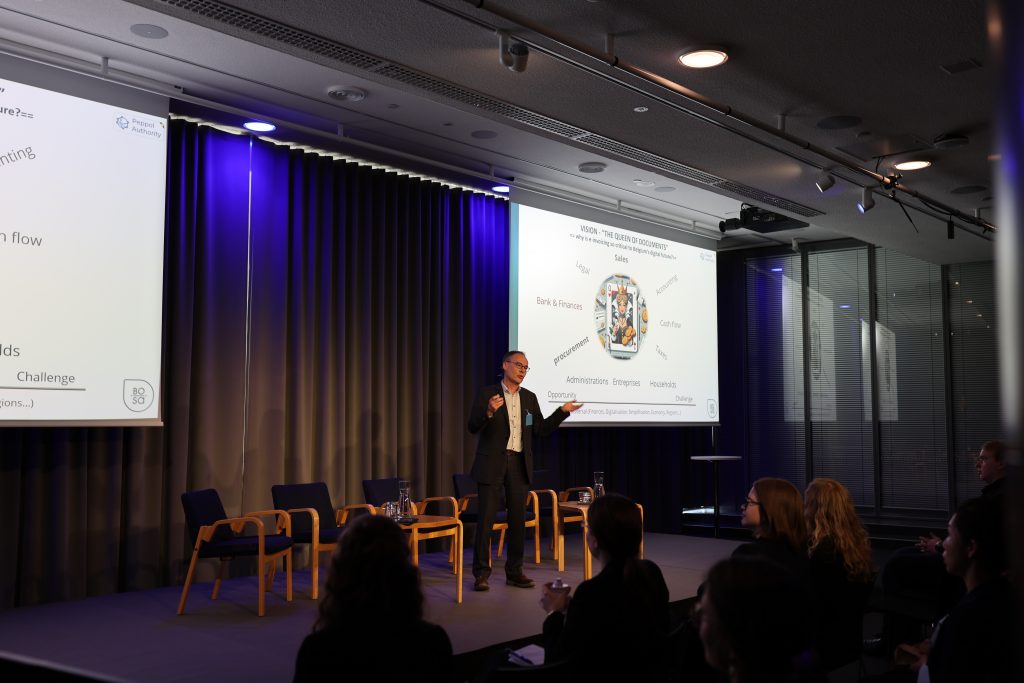
Serge Libert, Project Manager at the Peppol Authority of Belgium (BOSA), explaining the Belgium’s e-invoicing journey.
Sometimes mistakes can lead to new opportunities
The Japan–Finland e-invoicing initiative began with an unintended mistake that ultimately turned into an opportunity. The Finnish Ministry of Social Affairs and Health accidentally sent a request to a Japanese company asking it to send an e-invoice. At the time, cross-border e-invoicing was still highly uncommon, and sending an e-invoice across continents was almost unheard of. Luckily, with good collaboration, this situation turned from mistake into an opportunity to explore the possibilities further.
The results of that work were shared in a panel discussion hosted by Hiroyuki Kato (Director, Digital Agency and Cabinet Secretariat, Government of Japan) from the Peppol Authority of Japan. One of the most important results of the initiative was the push for OpenPeppol to extend the so-called PINT model, which makes e-invoicing possible regardless of national borders, to also cover Europe. During the panel, Japanese companies operating in Finland shared their experiences of adopting, or preparing to adopt, Peppol e-invoicing.
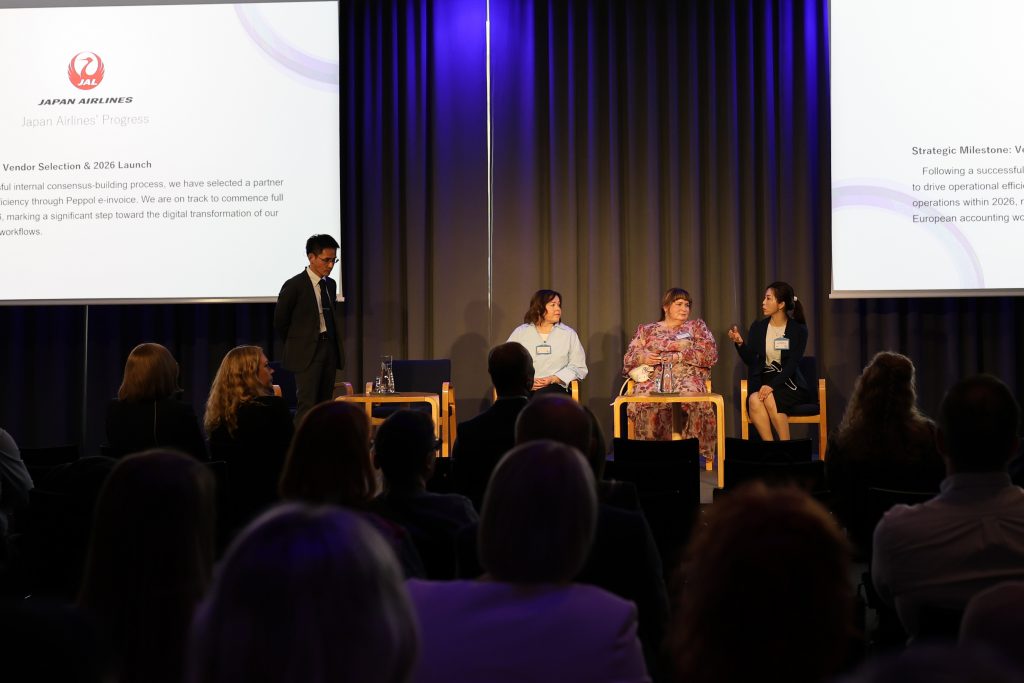
From left to right: Hiroyuki Kato (Director, Digital Agency and Cabinet Secretariat, Government of Japan), Mervi Majaneva (Chief Financial Officer, TOYOTA GAZOO Racing World Rally Team Oy), Piritta Järvinen (Senior Financial Manager, Murata Electronics Oy) and Yukako Sakai (Japan Airlines Co., Ltd) discussing the Japan-Finland e‑invoice collaboration.
Working together can matter even more than beating Sweden – as a Finn
Ismo Tiittanen Strategy Director from NCC Finland Ltd, a Nordic construction company, shared his vision of how NCC aims to realise benefits by implementing Peppol across its supply chain. Tiittanen explained that Peppol adoption is an effort where even competitors should collaborate. The goal of truly digital and efficient supply chain cannot be achieved by a single company acting alone.
Entire industries stand to benefit when ordering, logistics and invoicing processes can be digitalised. Tiittanen summarised the guiding principle of his presentation by stating: “When we win, why should others lose?”. And even though, as a Finn, few things feel better than beating Sweden, in this case cooperation clearly outweighs competition.
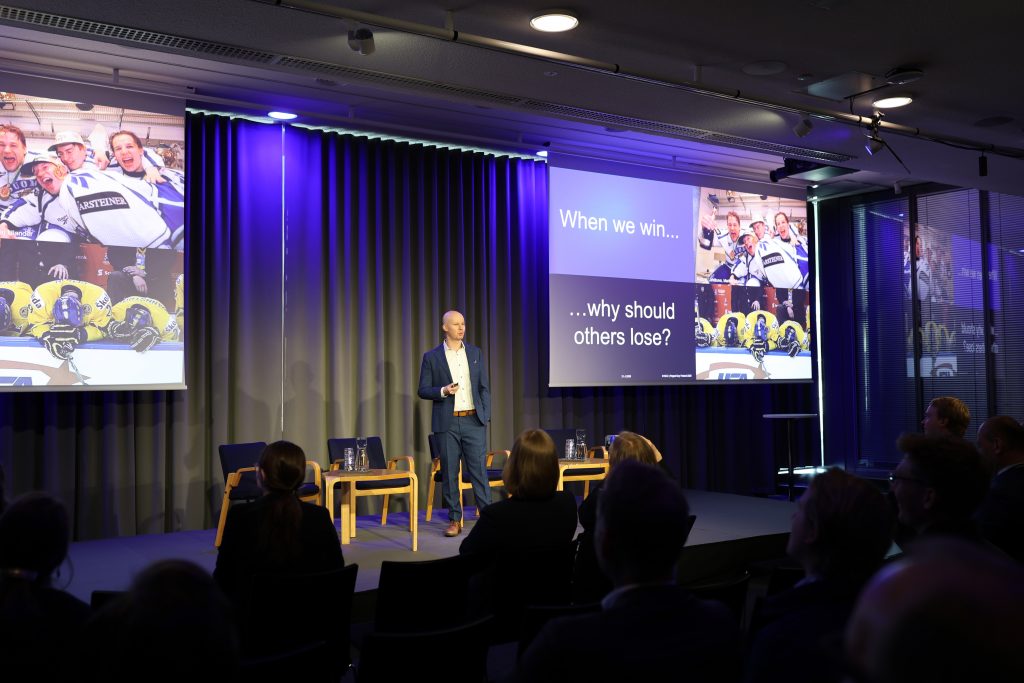
Ismo Tiittanen, Strategy Director at NCC Finland Ltd, on driving Peppol adoption through cross‑border collaboration.
The opportunities ahead
As noted, Finland can be described as a logistical island. However, we have decided to turn this challenge into a motivation to unlock our potential in efficient global trade. Within a relatively short timeframe, we have already seen that this is achievable through multiple approaches, ranging from legislation to collaboration.
We challenge other Peppol Authorities to compare their Peppol transaction volumes with their countries’ export and import figures. In Finland’s case, this comparison reveals clear untapped potential, particularly with Germany and our Nordic neighbours. If we embrace interoperability in the way we use Peppol, then the benefits of efficient global trade are already there waiting to be realised – for all of us.
The Peppol Day Finland 2026 conference was organised in partnership with the Confederation of Finnish Industries (EK) and the Finnish Patent and Registration Office.
Writers: Hannu Kivinen, Lead Specialist & Noora Salonen, Development Manager, Peppol Authority of Finland within the State Treasury
Photos: Eeva Penttilä, State Treasury
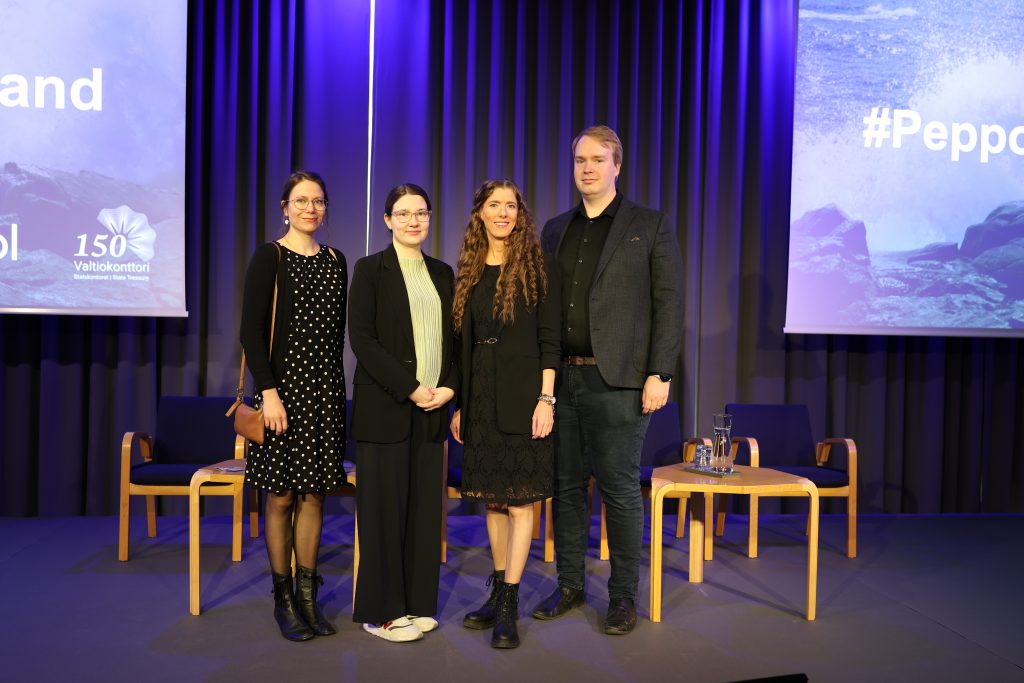
Behind the scenes, the programme and preparations came together through precise teamwork, echoing the interoperability and consistency Peppol brings to digital trade. From left: Specialist Ester Laato, Development Manager Noora Salonen, Conference Host Henni Purtonen and Lead Specialist Hannu Kivinen.