Amid the transformation of hybrid work, one perspective has received surprisingly little attention: the office is not just a workplace, but a mirror of society. The latest publication in the State Treasury’s 150th anniversary article series shows that work environments reveal an organisation’s values, trust, and ways of encountering one another. Renewing offices is part of a deeper structural shift in working life, not merely a spatial solution.
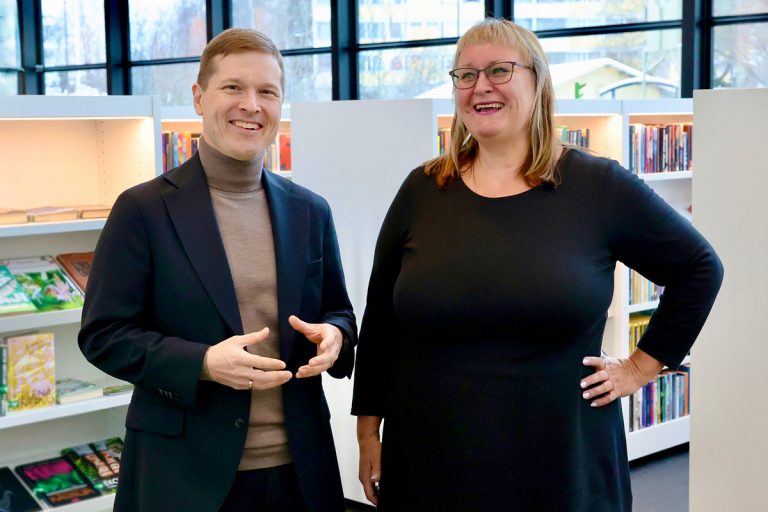
Personnel Development Manager Elsi Vuohelainen of the State Treasury of Finland and architect Anis Souissi of US Architects Ltd explain in an article written by Henni Purtonen how physical and digital work environments shape the rhythm of work, community and thought.
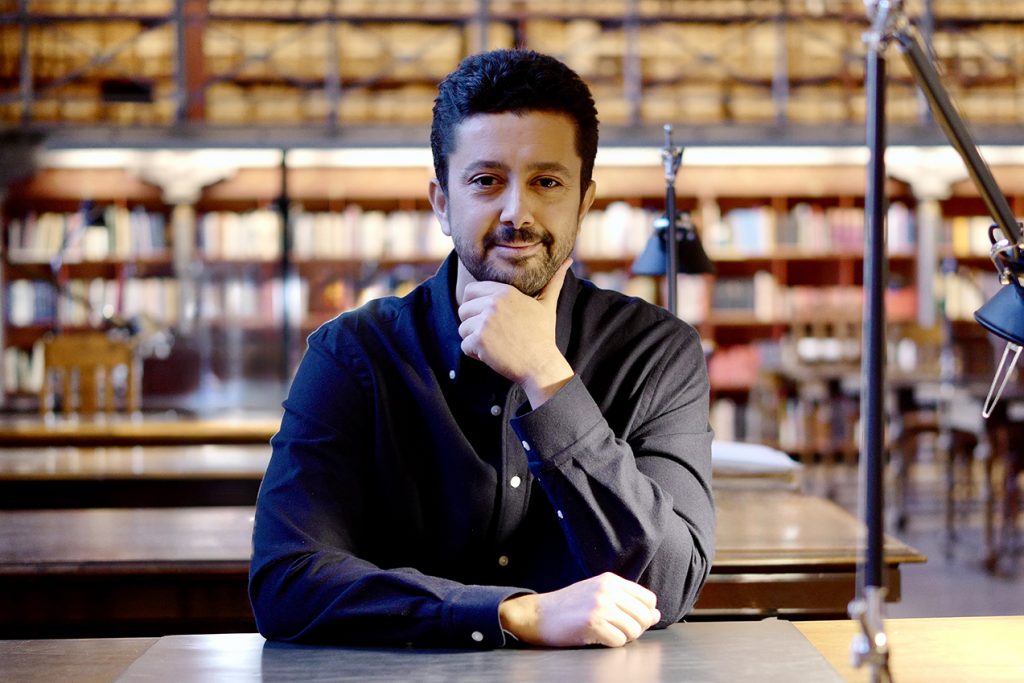
The National Archives of Finland is, in Anis’ view, a compelling example of timeless architecture. He is drawn to historical, high‑ceilinged spaces that invite reflection and give thought room to expand.
Souissi challenges readers to consider the long-term nature of design: “Architecture loses its meaning when people’s needs fade into the background. Planning then becomes guided by an illusion of egoless freedom or by repeating familiar solutions without truly analysing new directions or critical discussion. Are we really building something the future will want to preserve?”
Spaces carry cultural memory – which is why change is always more than a renovation
International architectural discourse has emphasised that interiors act as cultural memory stores: they carry layers of habits, values, and social structures. Spaces guide behaviour and create expectations for how we act within them. For this reason, renewing them is always also a cultural act.
According to Vuohelainen, work environments make visible the kinds of encounters that are valued at work. “Workspaces shape how we think, meet, and structure our work. Most work environments are built for performance. We need a culture that dares to slow down, listen, and connect,” Vuohelainen says.
This perspective reinforces the article’s central insight: the office is not a neutral backdrop but an active part of the transformation of working life. As work rhythms, forms of interaction, and community evolve, spaces must evolve as well.
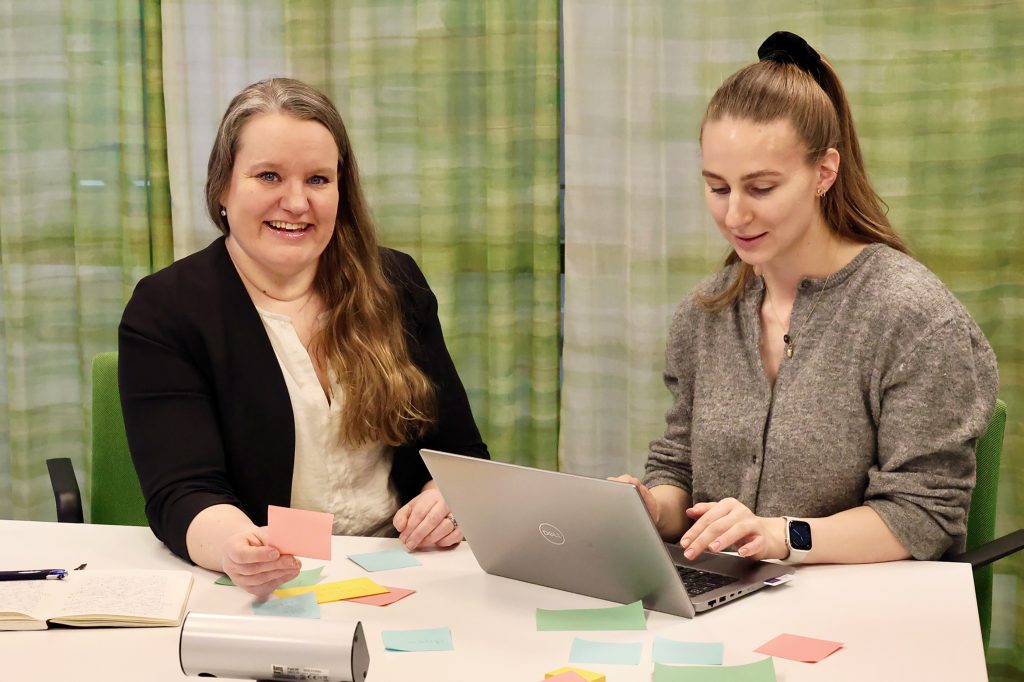
For Elsi, the office is a learning environment. In the photo, Elsi (left) and her colleague Eevi‑Marie Tihinen sift through workshop results, bringing to light what often remains unnoticed.
Hybrid work challenges spaces in new ways
The combination of remote and on‑site work raises the question of what kinds of work environments the future will require. According to Vuohelainen, spaces must simultaneously support focused work, spontaneous interaction, and a sense of community – things that do not emerge on their own.
Finding this balance is a societal challenge: cultures and organisations are constantly under pressure from new phenomena, and spaces must respond to this change without losing their human scale.
Between layers of time
The article The spaces we work in reveal who we want to become is part of the State Treasury’s 150th anniversary series, which brings together history, the present, and the future. The texts examine societal change from different angles and highlight phenomena that shape our time. The series does not offer ready-made answers but invites readers into dialogue and new interpretations.
Read the article: The spaces we work in reveal who we want to become
Text and photos: Henni Purtonen