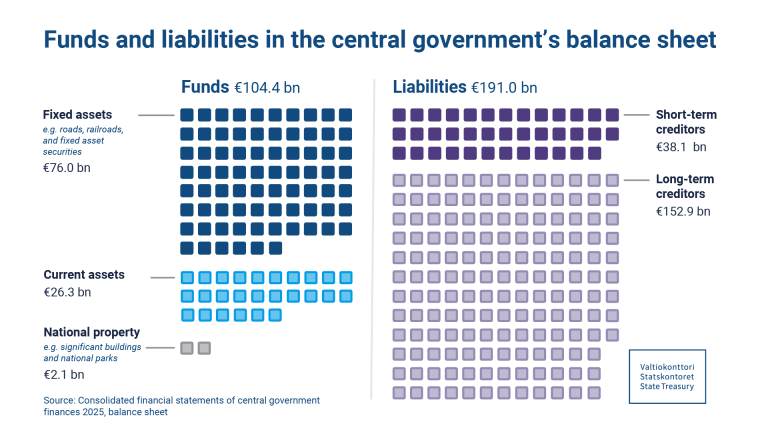
Every year by the end of February, government agencies and departments draw up the final central government accounts, which include the annual report, budget realisation statement, income and expense account, balance sheet and notes. The State Treasury compiles the account details of agencies and departments in the central government’s Central Bookkeeping and draws up the final central government accounts based on this data.
- © State Treasury (more precise expression of time)
- Includes / the image is based on materials of the State Treasury (more precise expression of time)
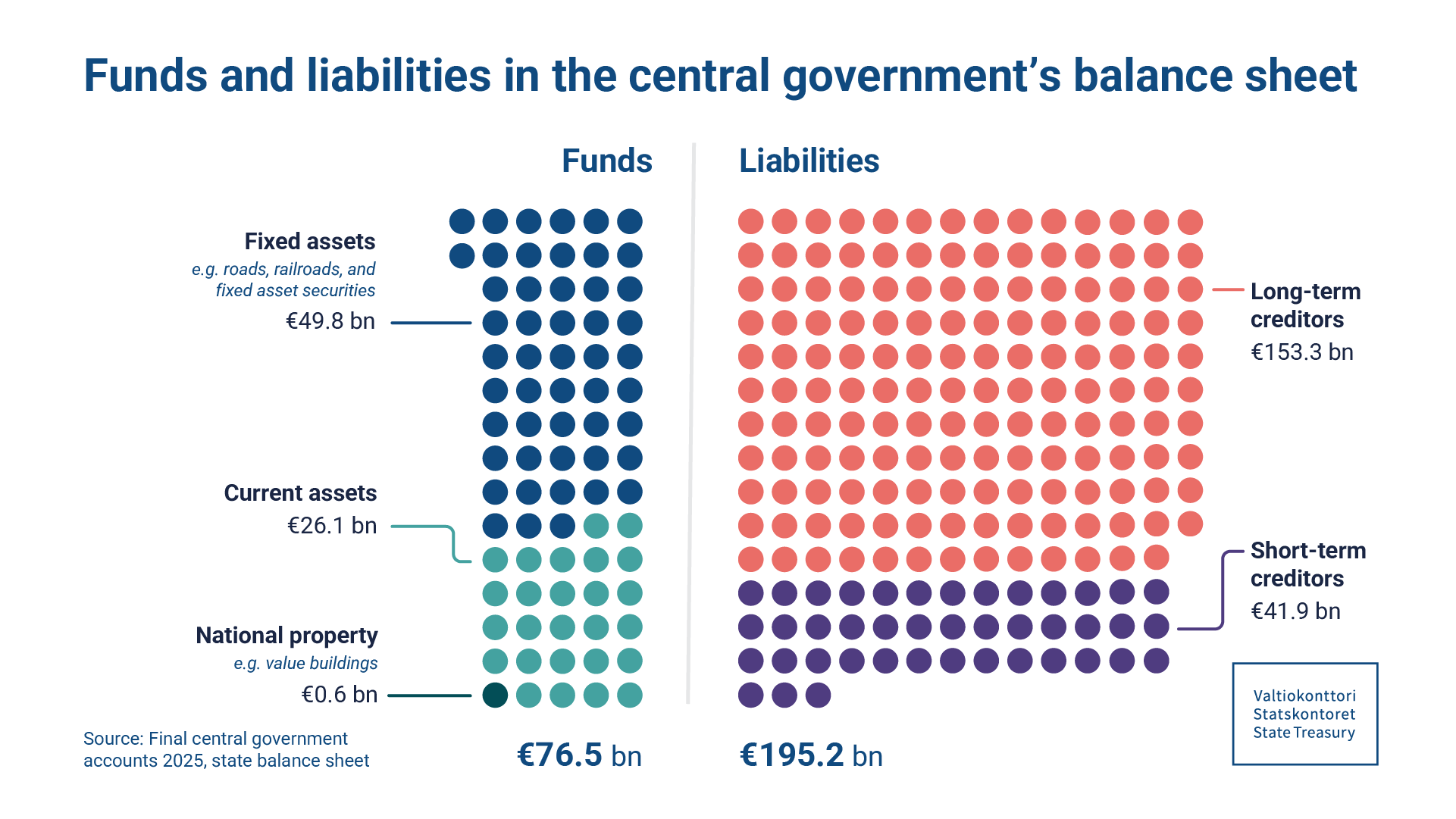
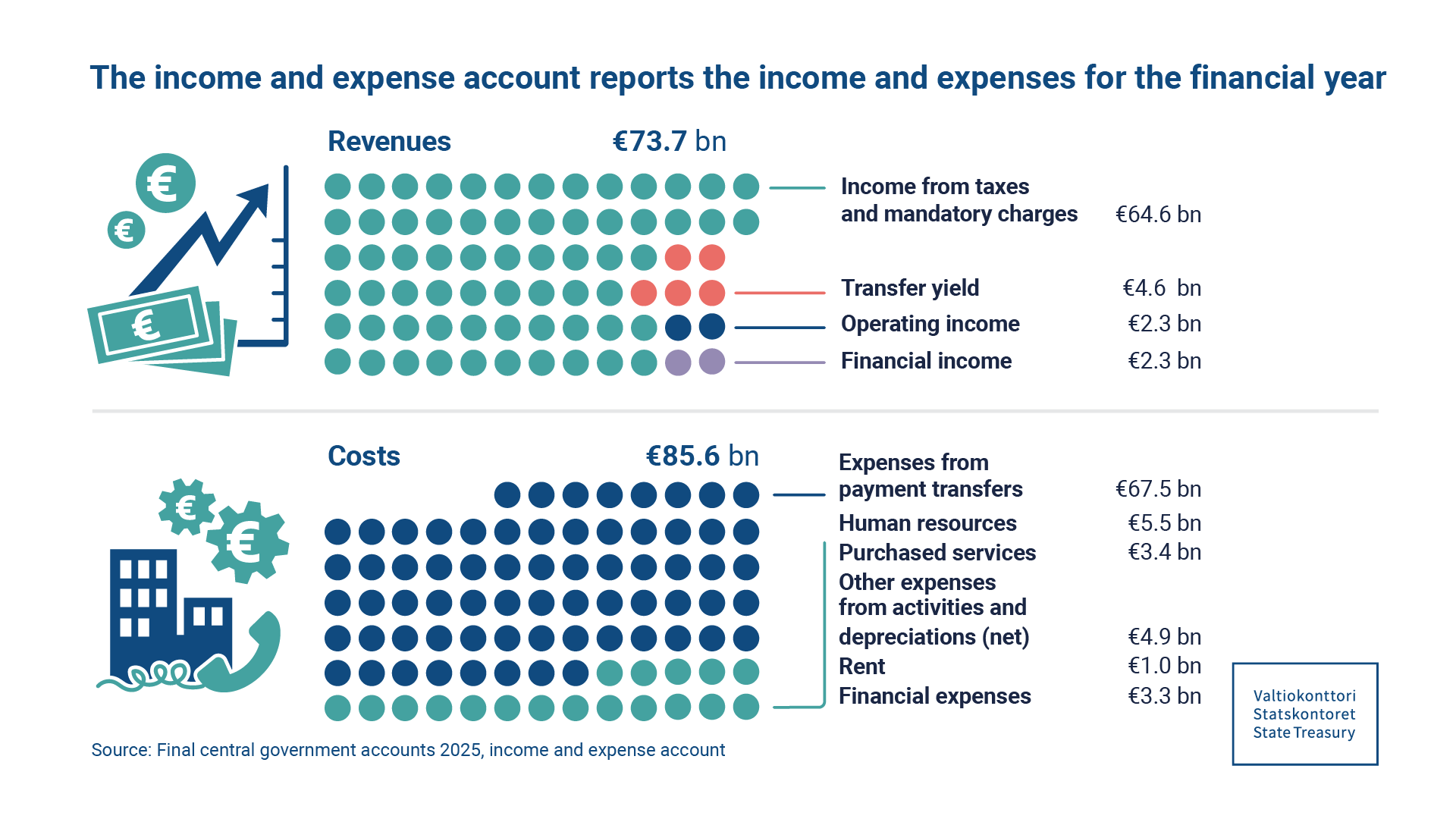 According to the central government’s income and expense account, the deficit for 2025 is EUR 11.9 billion, while the deficit for 2024 was EUR 12.7 billion. Revenues increased by three percent and expenses grew by one percent compared to the previous year. The growth in revenues was mainly due to higher tax income.
What are payment transfers?
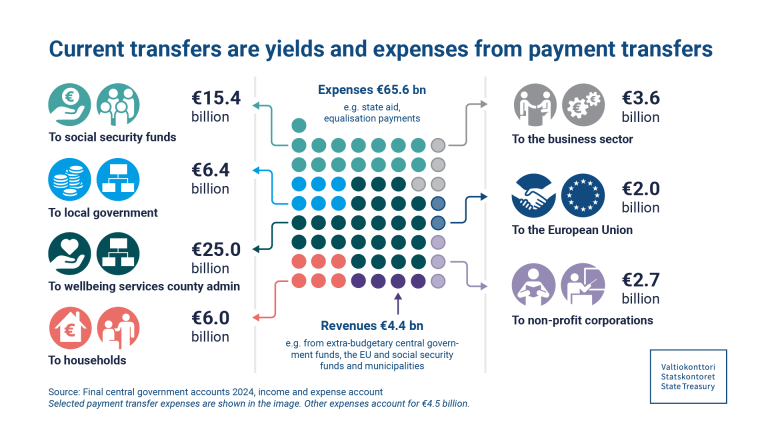
Revenues and expenses from payment transfers do not involve a direct consideration. However, tax revenues are presented as separate revenues in the final accounts. Revenues from payment transfers include e.g. financial contributions received from European Union (EU) Structural Funds that are gross budgeted in the central government budget.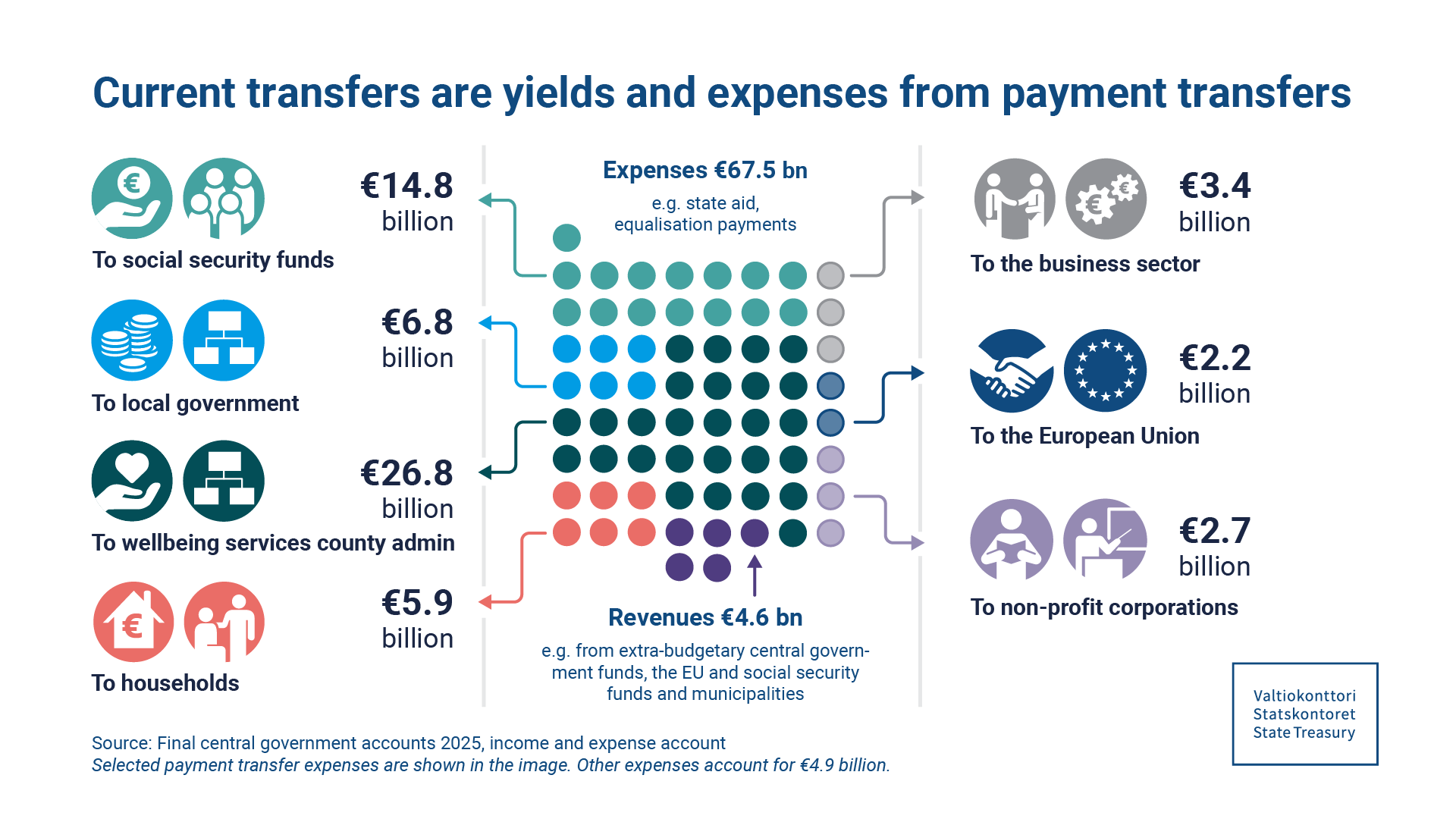
Funding allocated to wellbeing services counties, central government transfers and grants paid to municipalities and social security funds fall under payment transfer expenses. The payment transfer expenses accounted for 79 percent of all expenses, which means a total of EUR 67.5 billion. This is about EUR 1.9 billion more than in the previous year.
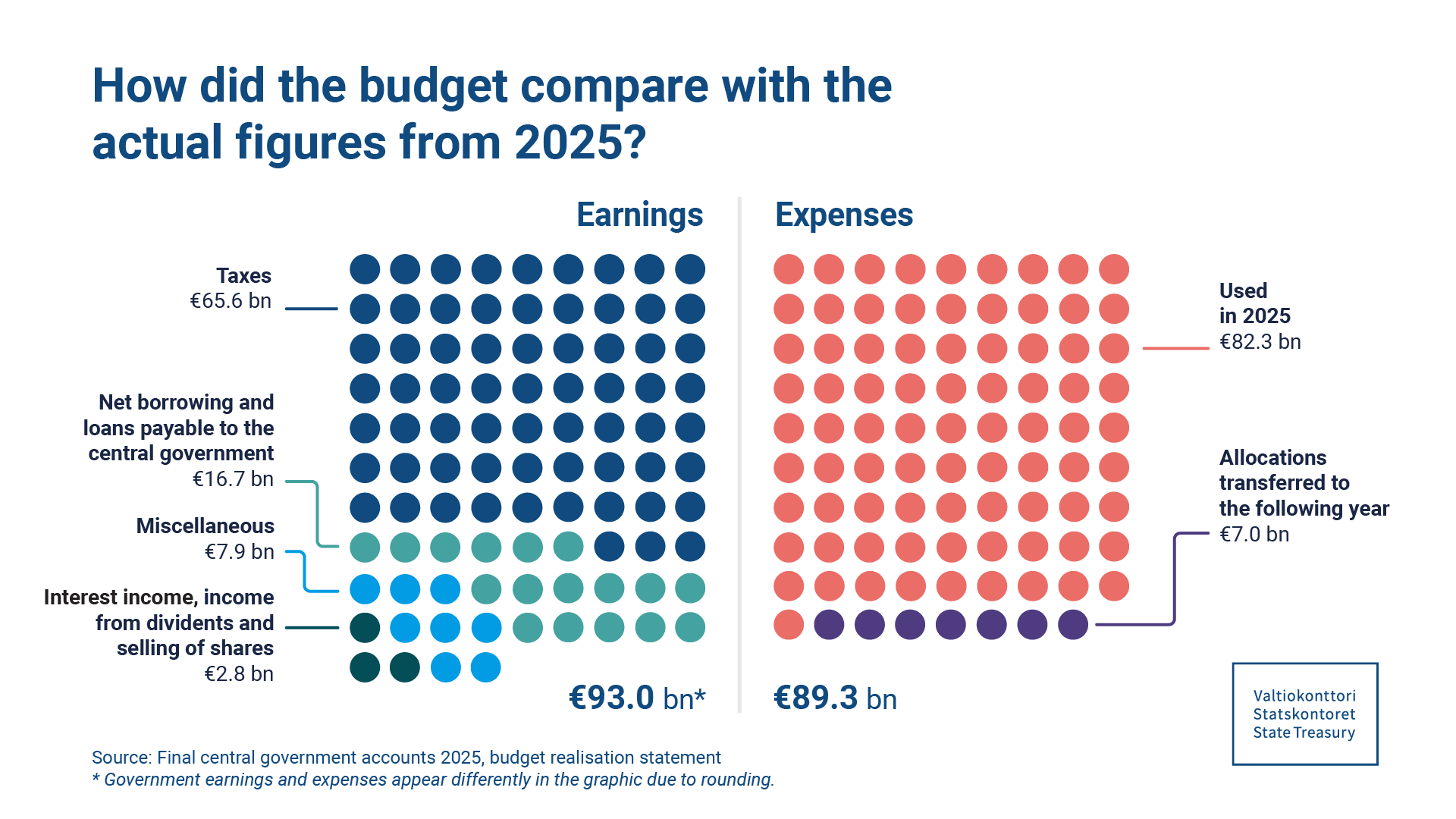
The surplus of the budget realisation statement according to the final central government accounts for 2025 is EUR 3.7 million. Loans taken out using the budget realisation statement were treated as income. In 2025, net borrowing totalled EUR 16.4 billion.
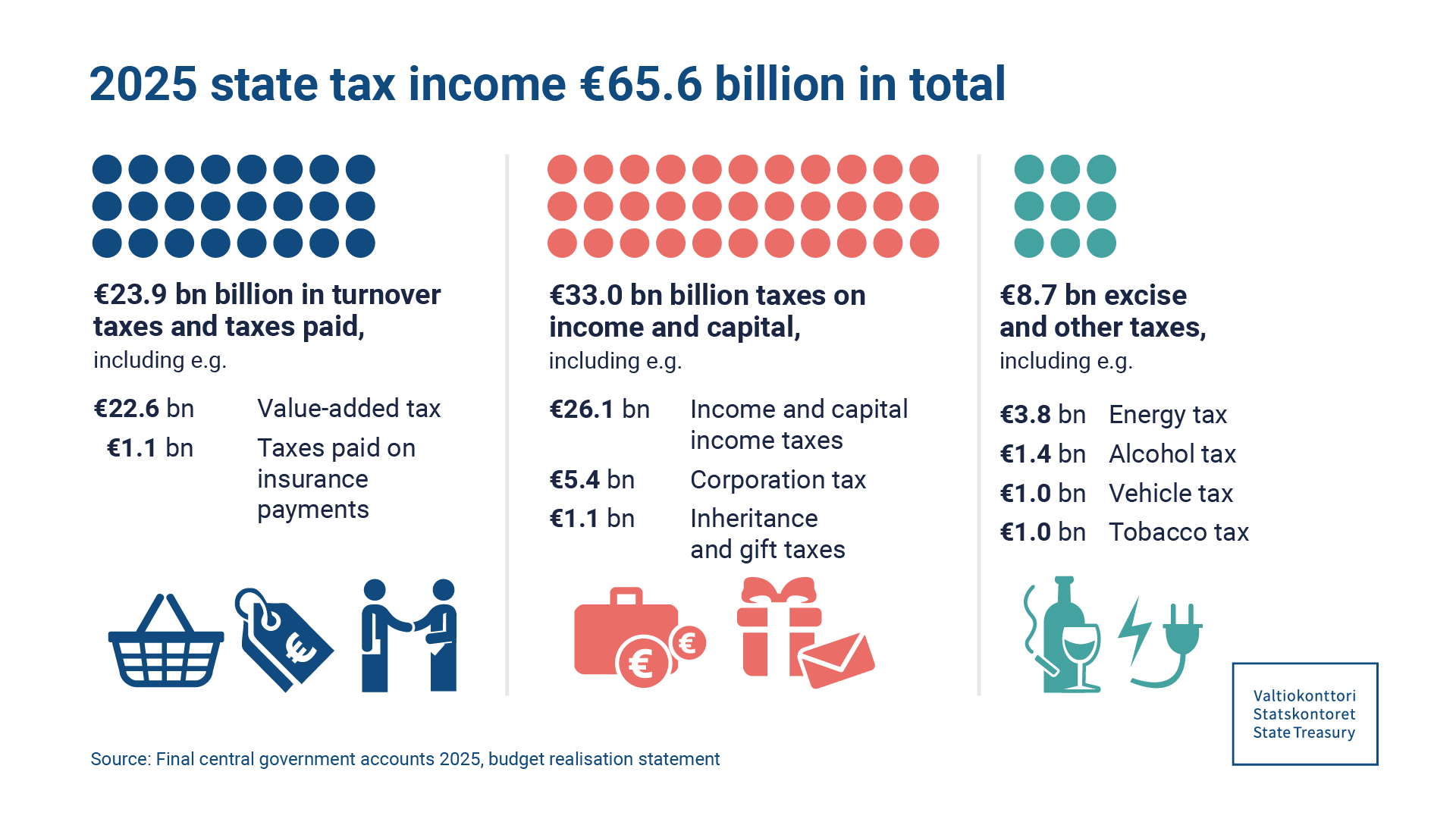
Monitoring of authorisations as part of the monitoring of budget realisation
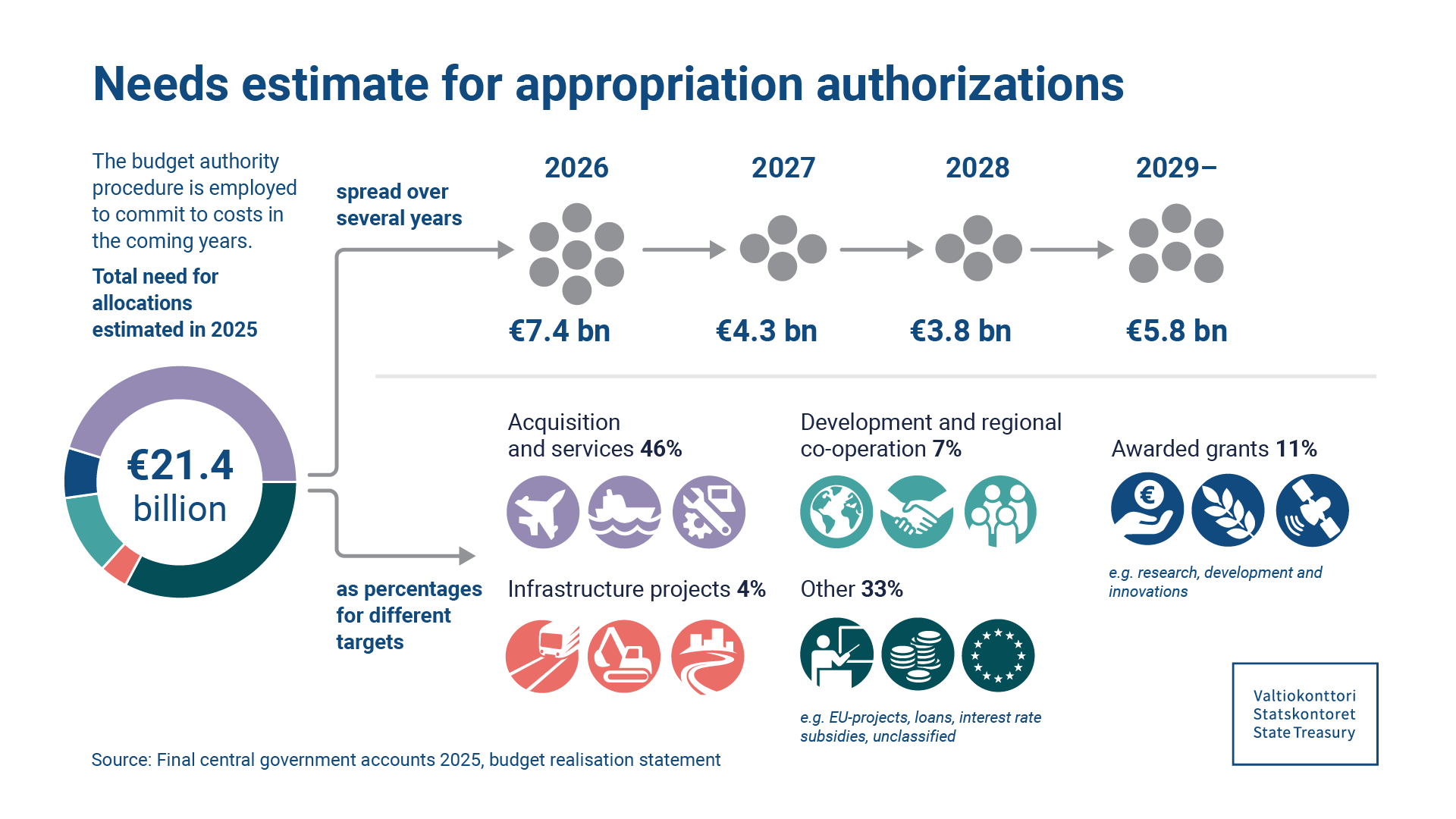
In conjunction with the processing of the budget, Parliament can also grant an authorisation that is limited in terms of quantity and purpose of use for making agreements and commitments. The appropriations required for the expenses incurred from this are included in the budgets for later years either in full or for the missing parts. An authorisation can be used during the financial year for which it is granted in the financial year’s budget. The exercise of the authorisation shall mean the conclusion of agreements and commitments for which the authorisation has been granted in the budget.
Parliament receives reports of the budget’s realisation
Operational and financial planning links the tasks and goals of the central government and ministries, as well as the operational tasks of government agencies, to each other. Each year in May, the Government submits the Government’s annual report to Parliament. It reports on Government activities, the management of central government finances and adherence to the budget. The report also includes descriptions of the performance of ministries, the final central government accounts and replies to parliamentary statements and position papers.
Further information:
Central Government Accounting, tel. + 358 (0)295 50 2000, keskuskirjanpito(at)valtiokonttori.fi