Most crises today begin in the same way. Someone realises they are no longer able to cope alone. Climate change, economic uncertainty, geopolitical tensions and technological transformation intertwine in ways that force individuals, organisations and societies toward a shared conclusion: solutions must be built together. Networks are the places where a fractured reality can slowly be woven together again – not through top‑down command, but through the courage of people who choose to meet.
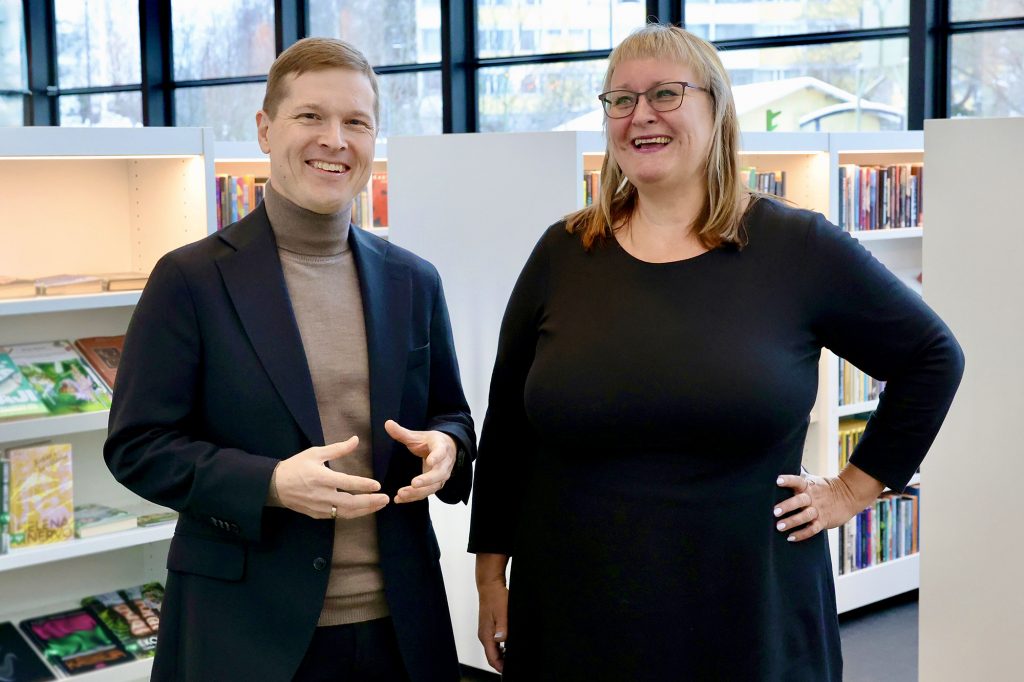
Timo and Sari try for a moment to recall when they last met, but a shared laugh quickly sends the conversation in another direction. It flows on just as naturally as ever.
This is the landscape in which researcher and educator Timo Järvensivu of Tim Lakeside Ltd and Sari Virta, Head of Development at the State Treasury, have been working in recent years. They do not see networks as arrows and boxes in strategy papers, but as living links forged when people dare to trust one another. For them, trust is not a soft value at the margins, it is the frontline, often the only way to make progress when problems grow too complex for any one person or organisation to solve alone.
The moment trust became a skill
For Järvensivu, trust was not an abstract idea but something he had to learn the hard way. He still remembers a moment when collaboration fell apart. As a young researcher, he often stepped in to help others, doing their tasks in the hope of speeding up the work. Instead, it backfired.
“I did not know how to do things together with others”, he recalls. “I did things for them, and it annoyed everyone. People pushed back: Why didn’t you ask us? I had to learn that trust is a skill of both the hand and the heart,” Järvensivu says.
The experience stopped him in his tracks. Trust, he realised, does not grow from talking about it but from acting differently: asking questions, listening, giving space for unfinished thoughts. Real expertise does not emerge in the solitude of an office. It grows in the moments when someone dares to say out loud: “I don’t know yet. Let’s look together.”
This challenges the familiar image of an expert as the sole custodian of knowledge. Expertise is not about already knowing everything. In a world of intertwined and complex problems, it is increasingly about the ability to weave one’s own competence into a larger whole.
An expert alone is like a violinist practising in an empty room; only together can an orchestra create harmony. Trust is the clef that holds the ensemble, or any expert network, together. Without trust, harmony collapses, and many global and local problems remain unsolved.
Invisible infrastructure of society
As tensions between countries rise and protectionism gains ground, competitiveness is put to the test. The effects show up in everyday life: in job insecurity, in soaring grocery prices. Sitra’s Futures Barometer 2025 points to an erosion of confidence in Finland’s future. Only 18 percent believe that the country’s future will be better than the present. Young people see things more brightly, yet the wider landscape is clouded by uncertainty.
Expert networks can help rebuild the trust that economic pressures are wearing down. More than a virtue, trust is the invisible infrastructure of society. Without it, decisions stall and society grinds to a halt.
Many Finnish organisations could save time, money and mental energy if they dared to rely on the power of cooperation instead of turning inward and trying to cut back on something already in short supply. Virta has seen this up close. She says the power of networks lies in the simple fact that no one person believes they know everything.
“The volume of knowledge, understanding and ideas inside a team, organisation, administration or state is smaller than outside it. You have to take care of your own duties yourself, but it is always a good idea to look further when it comes to creative thinking and getting things done. When you go out, ask questions and listen, you will gain more,” Virta says.
Networks can be the space where experts, citizens and institutions meet – not only to share information but to build a common reality. They can restore confidence in situations where traditional structures are crumbling. But trust is not without its risks. It can also be distorted.
The dark side of networks
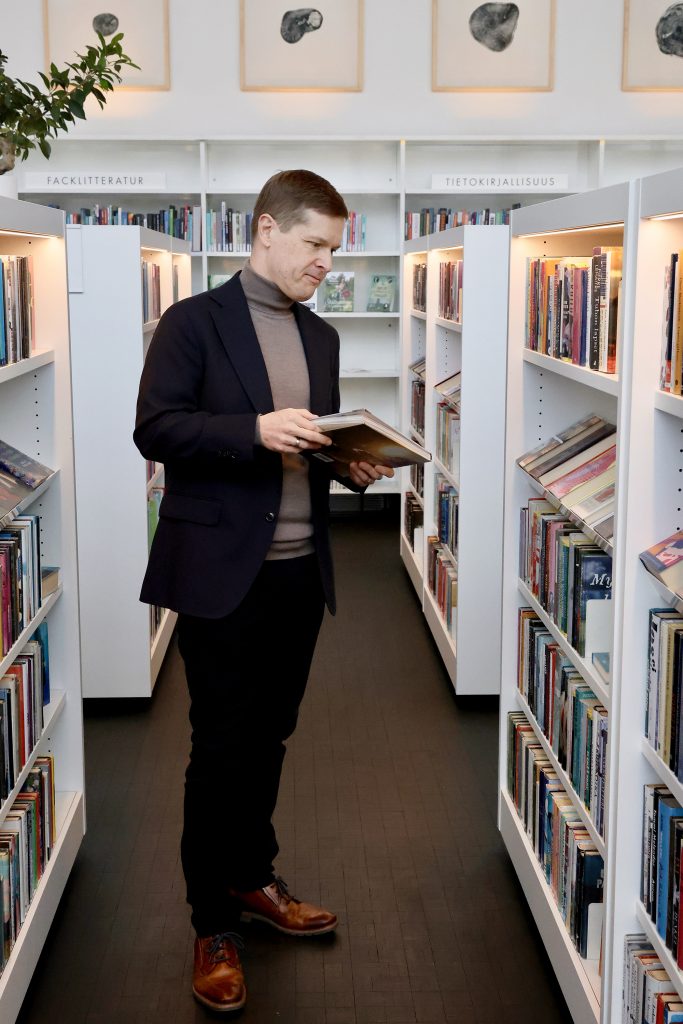
“I have learned to listen and to take criticism, and to pause when something truly matters,” Timo says.
Research identifies networks everywhere: in customer work, projects, service paths, strategy, management and politics. Yet Järvensivu points out that networks are not automatically good. They may also be closed, even harmful, such as old boys’ networks or mafia‑like structures that serve insiders while excluding others.
Racism and discriminatory structures similarly thwart the logic of networks. They narrow perspectives and shut out people who should be involved. Every excluded voice is a missed opportunity – an idea, insight or experience that might have changed the direction.
This is the exact opposite of how a good network operates. A healthy network is transparent and open, and it inspires trust. It also appears legitimate to outsiders, which is precisely why it can have the power to change society.
International crises reveal what networks truly mean when everyday life collapses. Aid organisations deliver humanitarian assistance, build hope and keep lines of communication open in situations where official structures falter. In crises, networks are pushed to their limits: a single closed route, a misinterpreted message or a crack in trust can halt the entire flow of aid. The strength of a network is also its vulnerability.
“The best way to learn is when you fumble a bit but still dare trust the process,” Järvensivu says.
But a network or working group is not the solution to everything. If all you do is churn out reports, the end result is exhaustion. Virta notes that even good tools can bog you down unless you use them wisely.
“A live community breathes together, whereas an administrative structure does not,” Virta sums up.
Philosophy recognises the same contradiction. Plato’s allegory of the cave reminds us that a single person sees only shadows on the wall, fragmented observations that can mislead. A network can perceive these shadows as a fuller picture, yet misconceptions can also be reinforced if everyone looks in the same direction. This is why a network can be either a window to reality or a mirror that confirms an illusion.
The network is a recipe, not a diagram
You cannot force learning or dictate the direction the future takes. Järvensivu compares the logic of a network to a garden rather than a clockwork. You sow the seeds, but no one can fully control what they grow into. Even a single encounter based on reciprocity can carry far into the future.
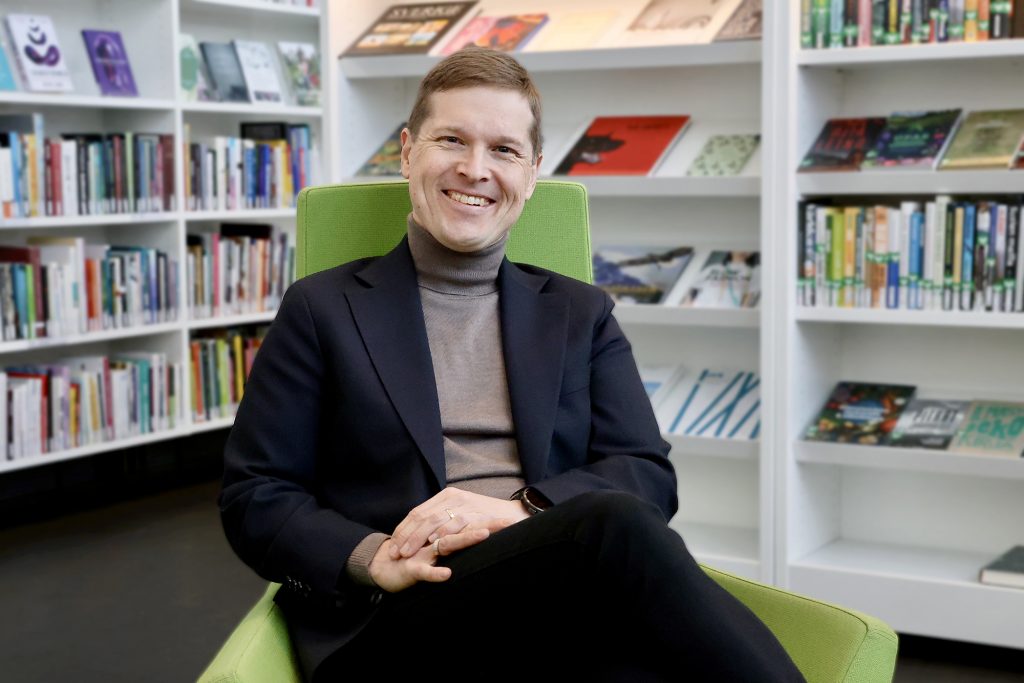
Network work requires a space where people can meet without hurry and without predefined roles. According to Timo, it is precisely this possibility to pause that separates functioning networks from those that become trapped in their own structures.
“What we need is doing things together, commitment and building of relationships. Even if you follow the instructions perfectly, you may still fail, and afterwards it is not fully possible to prove why this happened. The possibility of failure is always present in networks,” Järvensivu says.
In the Finnish field of innovation, networks are both necessary and controversial. Companies need rapid results, while researchers point out that trust can only be built slowly. Finance providers demand measurable outcomes, yet the real value of a network may lie precisely in what never happened: overlapping procurements that were avoided, unnecessary investments that were not made, or wrong paths that were abandoned before time and money were wasted.
The real value of a network cannot always be captured in figures. It becomes visible in how people change together and in how something emerges between them that cannot be forced. It can only be enabled.
What numbers miss
The same pattern is repeated in the daily life of companies and the public sector: metawork, rushing and management challenges. These structures bring plenty of opportunities. When information and resources are shared across boundaries, insights emerge that a hierarchy could not grasp. Rather than just a tool, a network is a touchstone for whether we genuinely dare to join our forces in building the economy and society together.
“If we could remember that we have far more things in common than those that set us apart, we could tap the power of cooperation, do things more smartly, and often also have more fun,” Virta reflects with a broad smile.
Järvensivu and Virta criticise the logic of the quarterly‑report economy and prefer to talk about evaluating impact. According to them, the value of a network is expressed in discussions and relationships rather than in numbers. Even if it fails, it leaves a trace that may help the next attempt grow stronger.
“Impact comes from experience, which is an indicator for a complex world. Does the way a person acts or thinks change? This cannot be measured, nor would it make sense to try. The value of a network can only be discovered within it: by asking its members if this is useful for you. If it is not, the network will shrivel up. But if it leaves a trace, this can be the start of a new network,” Virta continues.
People grow when the world opens out
When crises intertwine and uncertainty increasingly manifests in everyday structures, this is no longer just a question of managing networks. It is about the kind of world we wish to build, and the courage it requires of us.
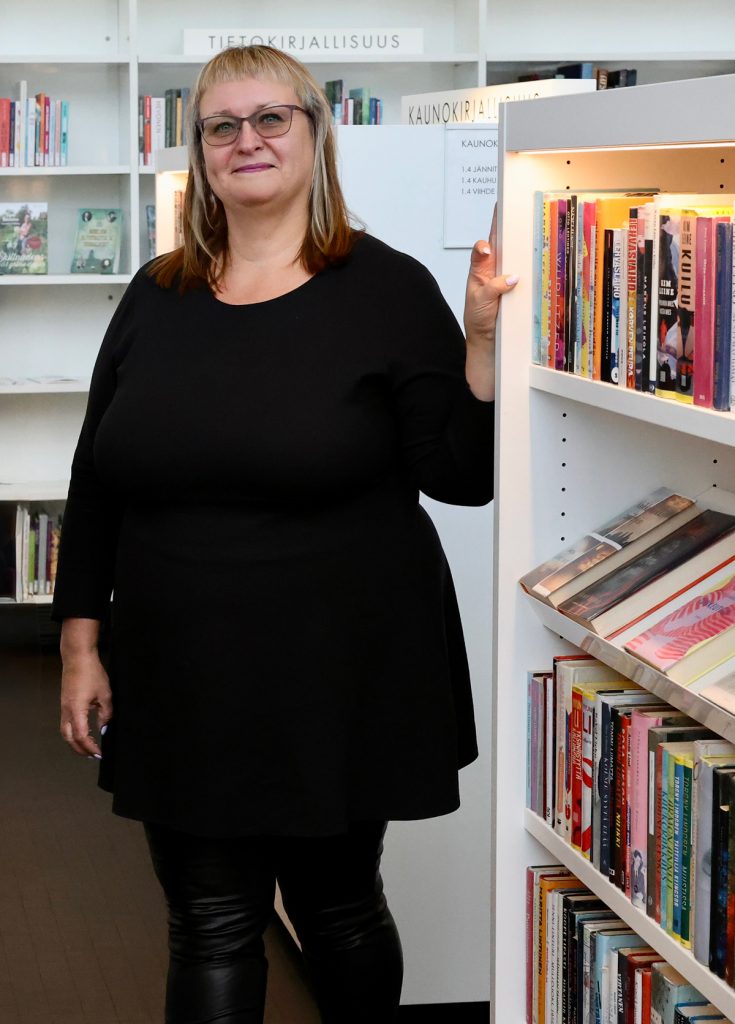
“A network is not just a way of collaborating — it is a field of expertise and leadership in its own right. Maintaining it requires clear principles and a long-term willingness to do work that no one owns alone,” Sari says.
Järvensivu and Virta have seen in international networks how much can be achieved when people truly encounter one another. The trick is not for everyone to take care of their own pieces in different countries, hoping it will all fall into place. It is about coming together, learning about each other and allowing space for something that cannot be scripted.
“When people share the same passions and goals, anything at all can come from it: funding applications, new ideas or simply the insight that someone on the other side of the world is struggling with exactly the same question,” Virta reflects.
According to Virta and Järvensivu, a network is a silent promise made by society. Virta notes that a network is a way of moving together towards a goal we cannot yet see.
“The world requires of us an ability to listen to each other even when we disagree. It requires curiosity and a willingness to cross boundaries we may not even know we have set,” Järvensivu continues with gusto.
This means that the jobs, economy and society of the future rely not only on technology or efficiency but on how we encounter one another. A network can be a place where new solutions emerge, or where we discover what we do not yet understand. Both are valuable.
Ultimately, the value of a network lies not in what it produces but in what it enables: that someone dares to speak out loud an idea that would not have surfaced anywhere else. Perhaps this is the very answer to what the world requires of us. Not perfection. Not certainty. But the ability to build trust, even when we do not know what will happen next.
We must not shut each other out. Doors can only be opened when we dare to step in together – even if no one is yet clear about the direction.
****
Text and photos: Henni Purtonen
Timo Järvensivu has researched and developed network cooperation and provided training and consultancy relating to this theme for three decades. In his doctoral dissertation (2007) he examined value-based management of strategic business networks. For the last 15 years he has helped build and develop the networks of many public sector organisations and NGOs, especially in the fields of health and social services, well-being, employment, municipal and regional development, and sports and physical activity.
Sari Virta is a Development Manager who builds active networks and engages in close stakeholder cooperation. Her doctoral dissertation (2018) focused on managing product development in creative organisations and their networks. She has strong development and management experience, and she combines strategic thinking with doing things at the practical level in her work. Sari is guided by human centricity, open interaction and willingness to promote a healthy working life. She is inspired by change and experimentation and believes that the best solutions can be created together.
In the video, Sari and Timo share their perspectives on networked collaboration. Timo’s five tips provide a clear, practical framework for approaching the topic. You can select English subtitles from the settings menu under Subtitles → English.